

I believe that having a living fence is one of the best choices you can make for your garden or outdoor space.
It’s not just about aesthetics, having one has several positive aspects from an ecological, environmental, and wildlife perspective as well.
I have several living fences in my backyard and others at my grandparents’ house. I love how they seamlessly blend into the area, while adding color and filling up the space with that natural texture.
In this article, I’ll discuss the most beautiful ideas, the step-by-step process of how to make a living fence as well as the best plants to get.
Best and Favorite Plants for Living Fences
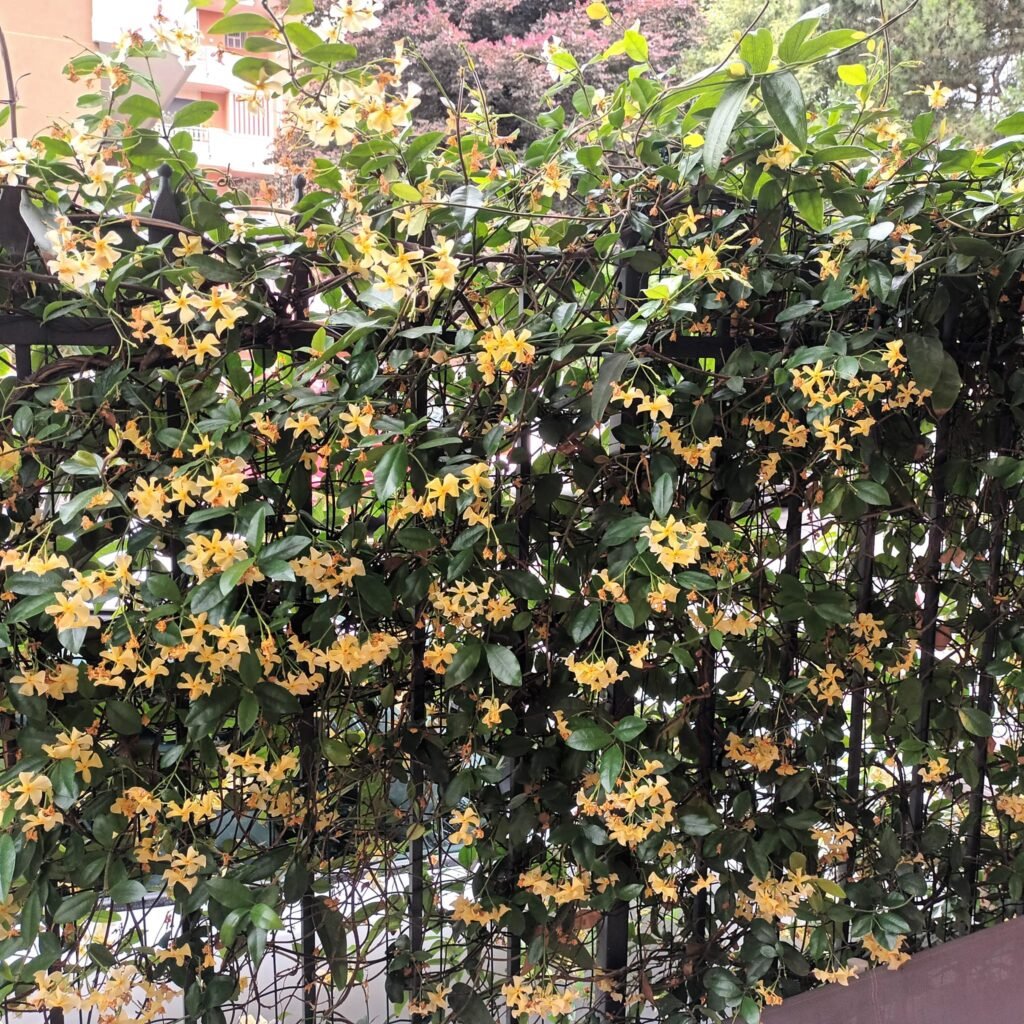
The first thing I want to make clear is that living fences require regular care. But that should surprise no one—they’re plants, after all!
They need to be watered, pruned, and shaped to keep them looking their best.
Still, in my opinion, the advantages far outweigh the extra care it needs. And if you’re already in the habit of watering your garden or have a sprinkler setup, maintaining it hardly feels like work.
The best plants for living fences differ from region to region. If you live in a coastal area, for example, you need a plant that can tolerate salty air and strong winds.
In dry regions, you want a drought-tolerant species that thrives under direct sunlight, and so on.
Choosing the right living fence is entirely dependent on your local climate and environmental conditions.
There’s also the aesthetic, of course; different plants have different colors, textures, and shapes that can completely change the look of your space.
That said, here are the most popular living fences that can tolerate most conditions and require minimal upkeep.
Arborvitae
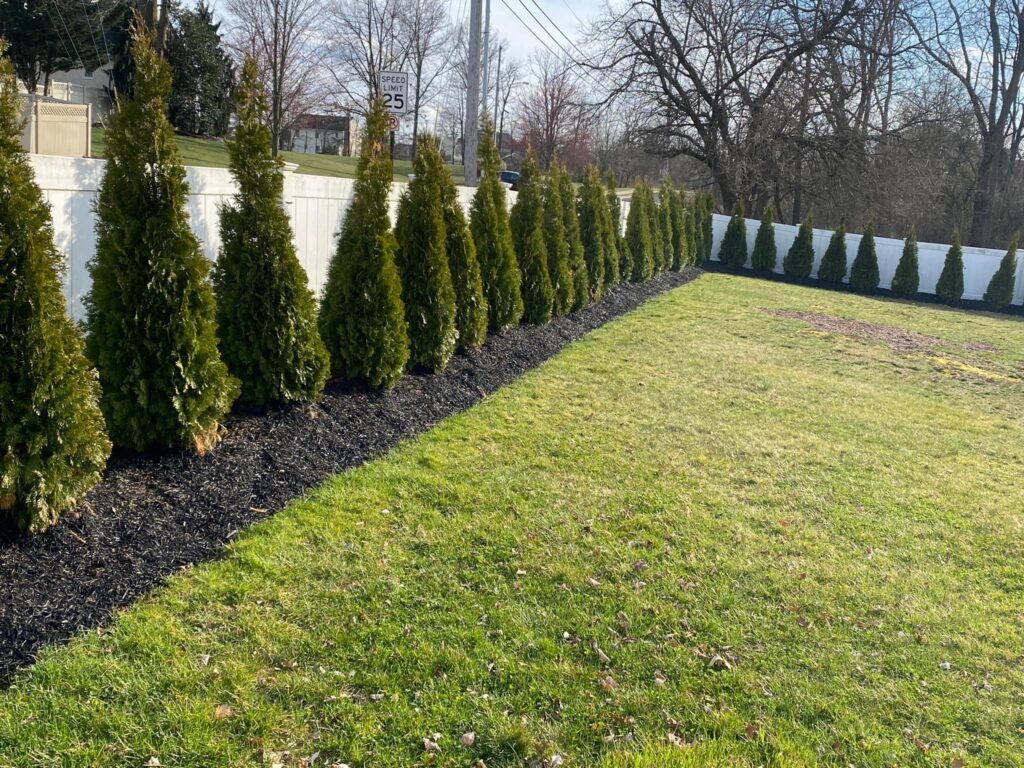
Arborvitae are tall evergreen trees that grow between 10 and 50 feet at maturity, depending on the species.
It’s a very classic choice for a green fence. They grow up to two feet per year and are pretty low maintenance.
They only need a deep watering once or twice a week once established.
Roses
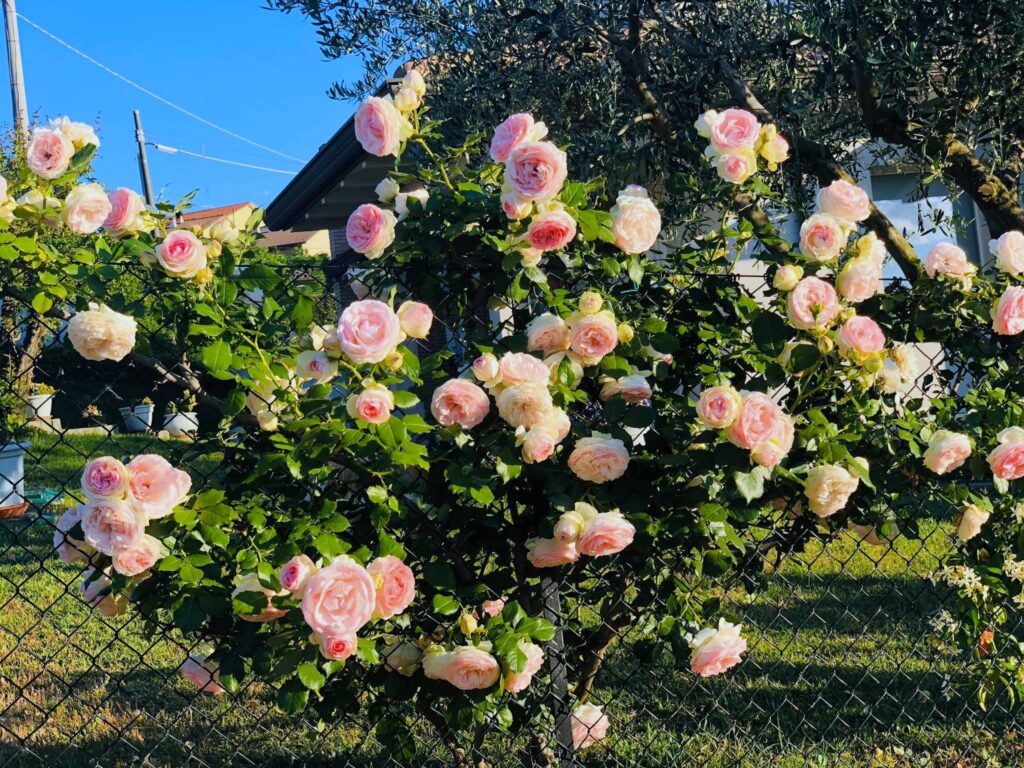
Roses may not be the best plants for a fence, but they are still among the most loved and most common, so many people decide to use them anyway.
Clearly, the great advantage in this case is the beauty of the flowers, which will add a magical touch of color to your entire garden.
Crossvine
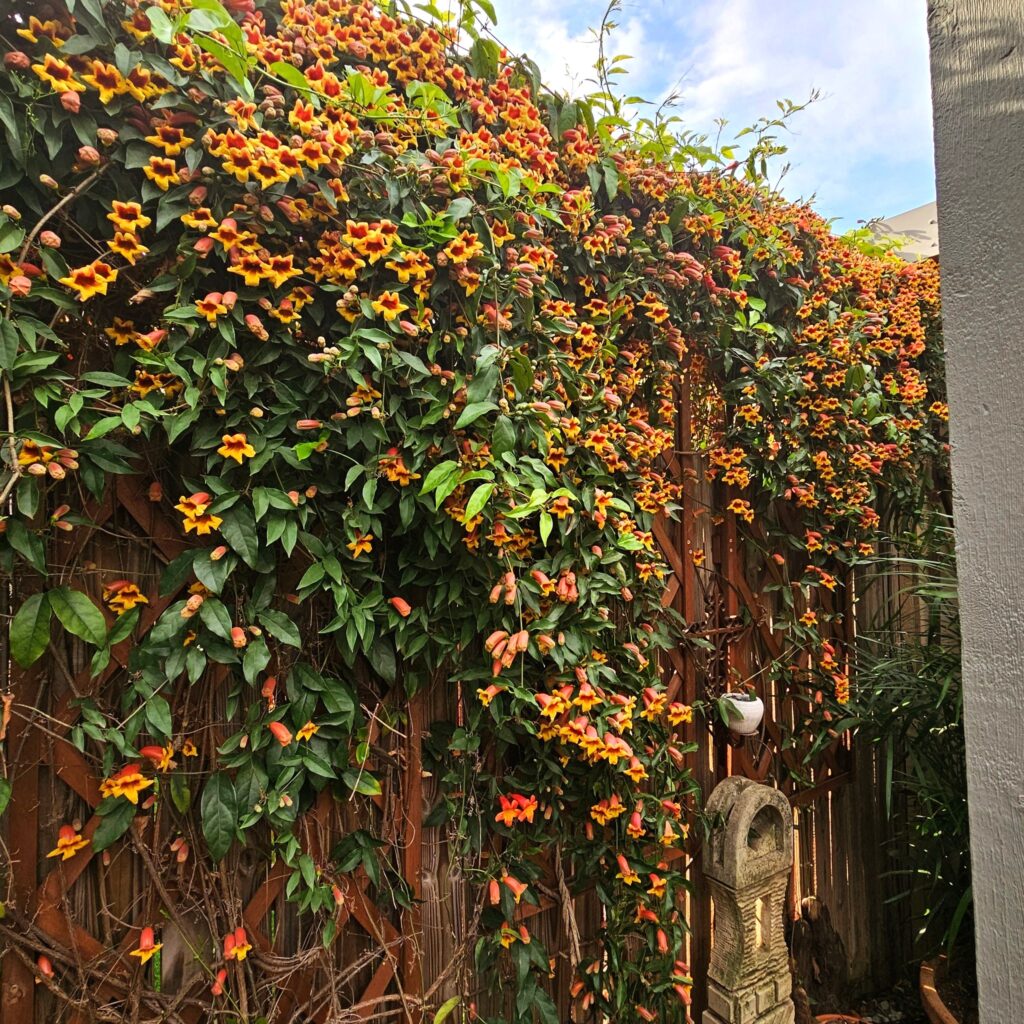
Another favorite among those who love color is the crossvine.
In this case, it is a woody vine native to the southeastern United States, so it is perfect if you are in that area.
It’s also quite fast-growing and is a good choice if you like the effect of a very dense hedge.
Flowers and Vegetable Mix
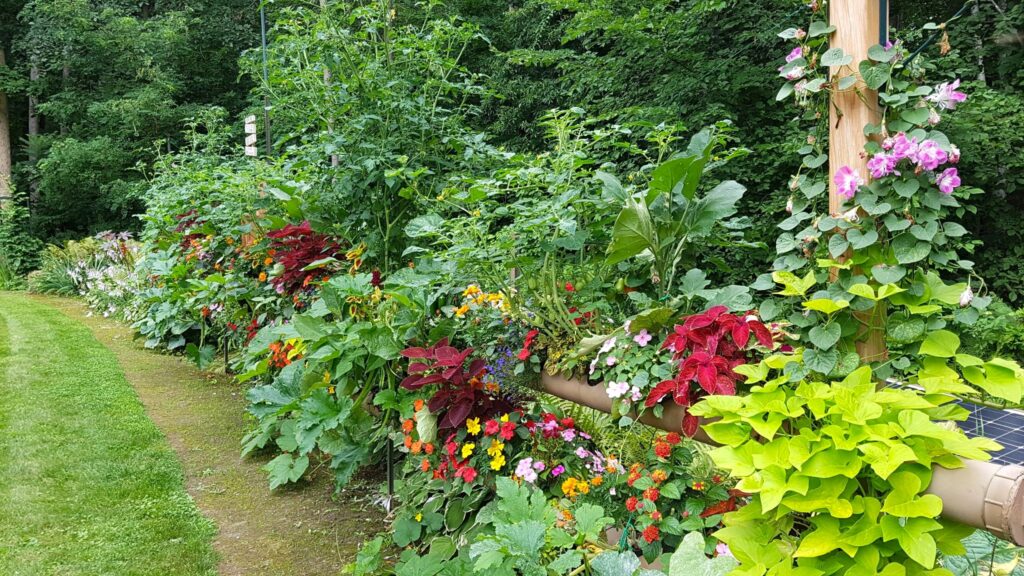
A very original alternative is to use both flowering plants and vegetables to create a truly unique fence.
And you can see an example in the picture above. In the end, you’ll get a wilder effect that will appeal to lovers of unspoiled nature.
Obviously, it’s not a good choice if you’re looking for a very neat and symmetrical effect.
Wisteria
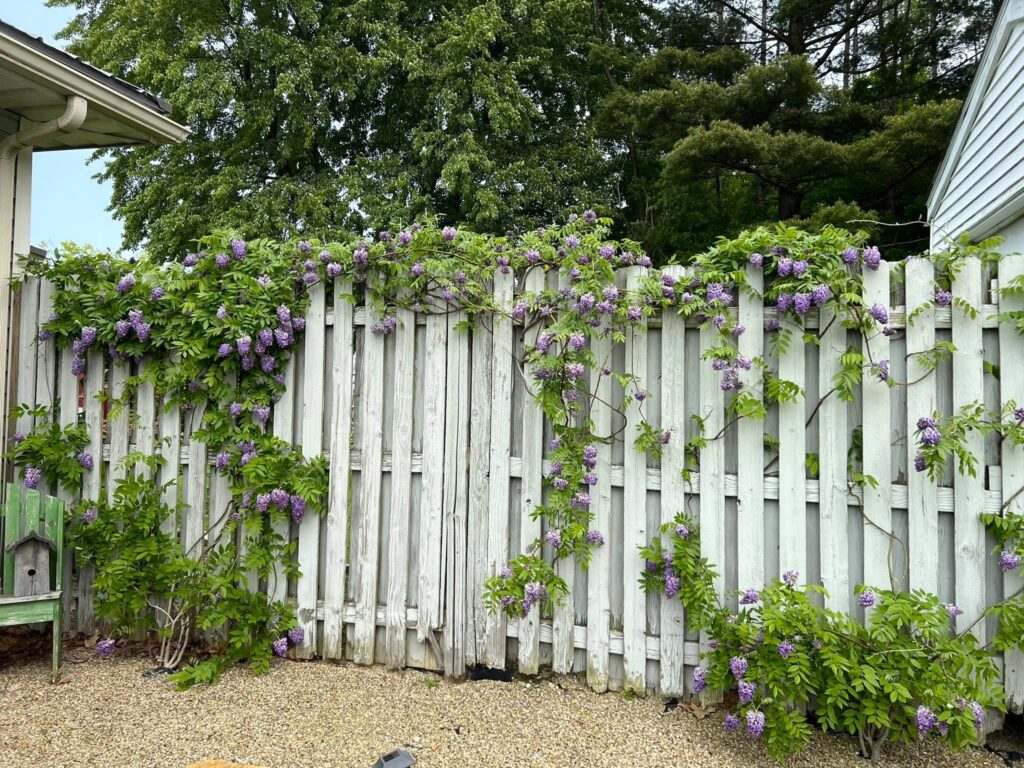
Wisteria is one of the most favorite plants because it creates a very special effect.
When paired with the right fence, you can recreate that slightly retro yet chic atmosphere that many people love.
And of course, you can enjoy the beautiful cascading clusters of pink and purple flowers.
PRO TIP: Please note, as I mentioned in this other article, Asian varieties of wisteria are very invasive. Opt for American wisteria (Wisteria frutescens), which is a native plant and significantly less aggressive.
Other Ideas
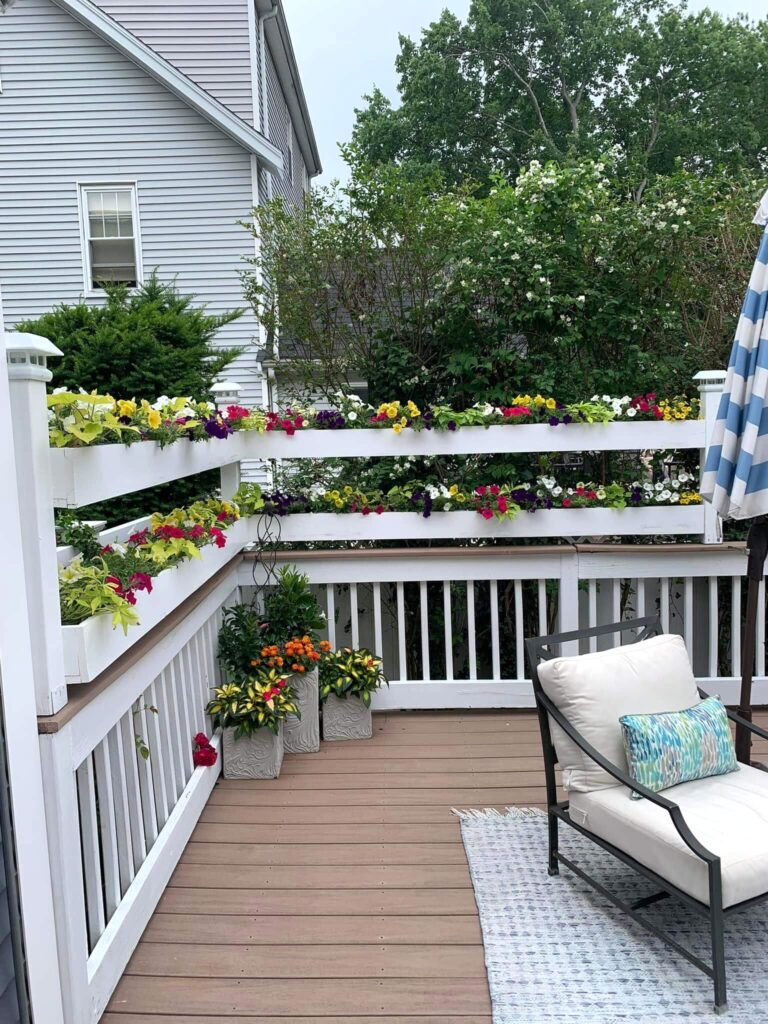
Other good ideas, if you want a fence that looks beautiful thanks to flowers, could be to place some planters directly on the fence.
In the photo above, you can see a really nice idea that also provides a good level of privacy.
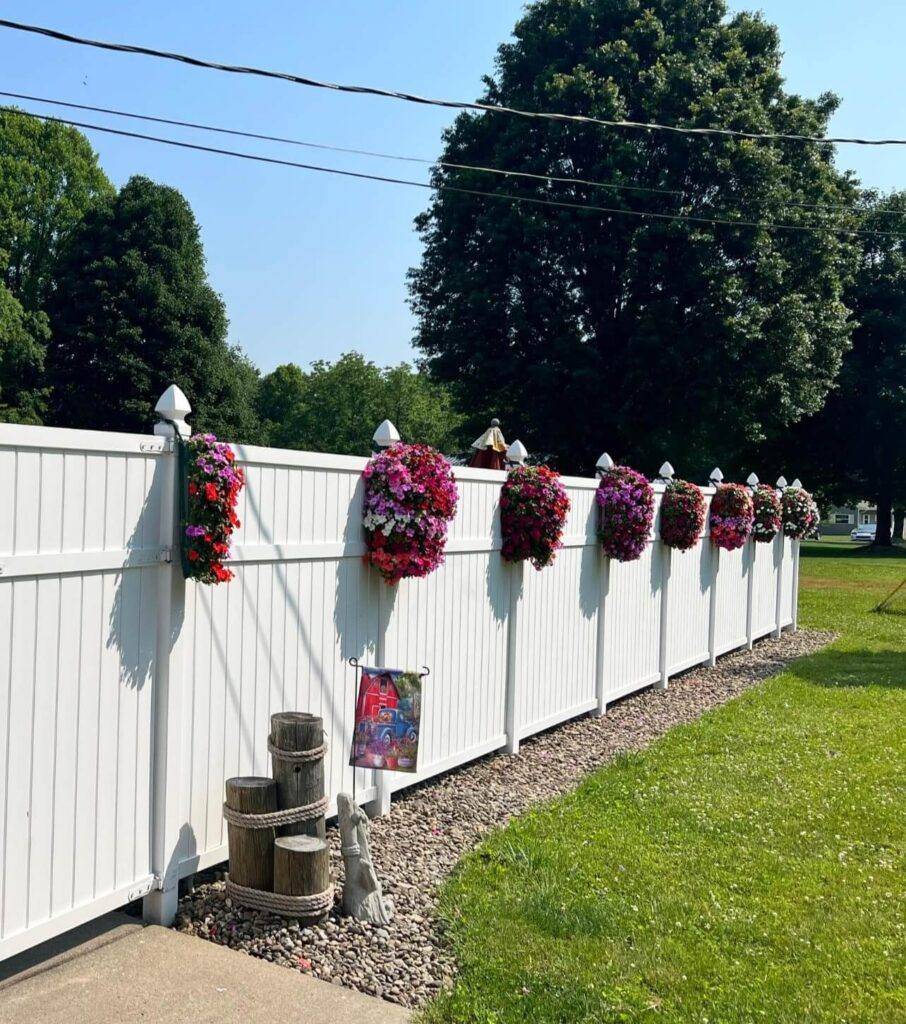
Or you can opt for another option using pots on the fence.
In the photo above, you can see some beautiful impatiens plants hanging directly on the fence.
How To Make A Living Fence
Now let’s move on to the most fun part. Making a living fence is pretty easy, even for beginners, you just have to follow some simple steps!
1. Start with a Basic Structure
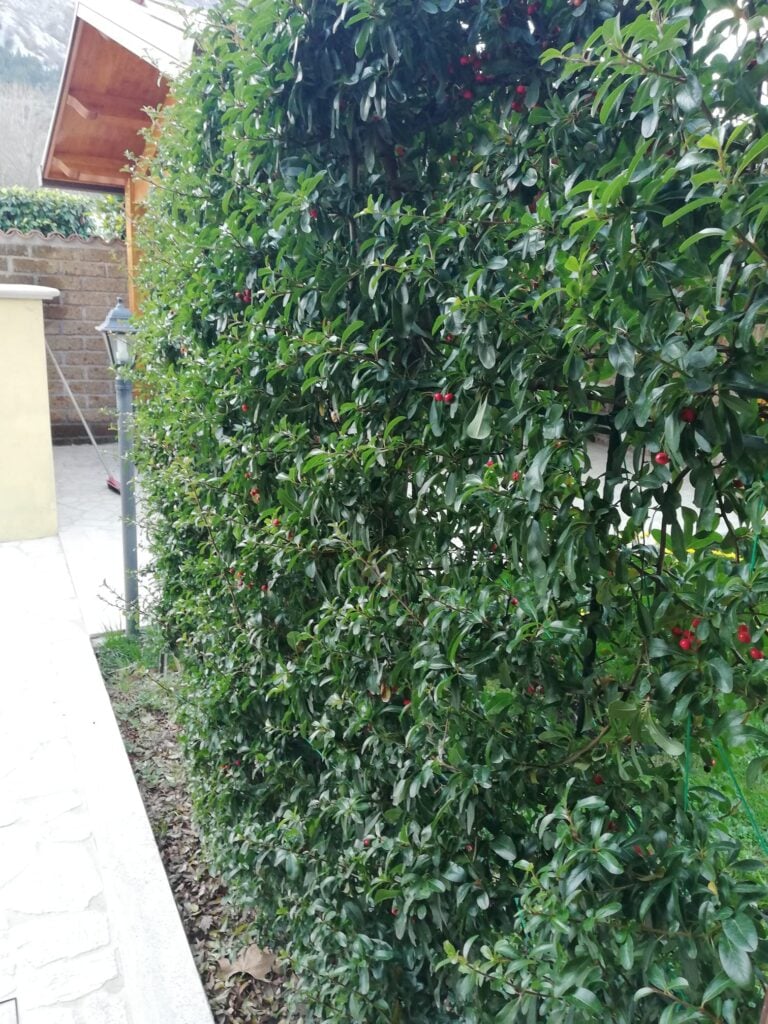
Install a wire fence, wooden slats, or metal mesh along the boundary line.
The structure will act as a guide for the plants, helping them grow upright and evenly while providing support and privacy until the living fence fills in completely.
The material is a personal choice. I like to use wood because I like the look of it, and it gives me a sense of warmth and closeness to nature.
If, on the other hand, you want a more concealed effect that highlights the plant, use metal mesh.
PRO GARDENER: Some houses may already have a fence. If so, you’re in luck—you can use it as is, you just need to add the plants!
2. Add the Plants
Obviously, the next step is to plant the plants in front of the supports.
Remember to space them around 1 to 2 feet apart (depending on the species) so they have enough room to spread and develop.
3. Train the Plants
Once your plants have established their roots, tie them loosely to the wiring with your desired pattern.
You can use soft garden twine, rubber ties, or plant tape so it doesn’t damage or cut into the stems.
4. Let Nature Do Its Thing
You’ve done your part; let nature do the rest!
Over time, the plants will fill out creating a natural wall along the boundary line.
Based on the plant you have chosen, care for it using standard recommendations. Water it as needed and fertilize it if necessary.
Let me just add one thing. A very common mistake I see is wanting everything right away, so some people give their plants too much water thinking they will grow faster. Obviously, this is totally wrong.
It will take time for a natural fence to grow, so be patient and avoid the common watering mistakes every gardener makes.