

Snake plants (Sansevieria, now often called Dracaena) are practically foolproof. Even if you forget to water them, they are forgiving plants that won’t hold it against you.
I have one by my window that went almost a month without water (I couldn’t water it due to a problem) and still looked healthy!
But there is a sweet spot for watering that keeps the leaves glossy and green. Below, we will take a look at these watering secrets that will make your plant more beautiful than all the others.
Snake Plants And Water
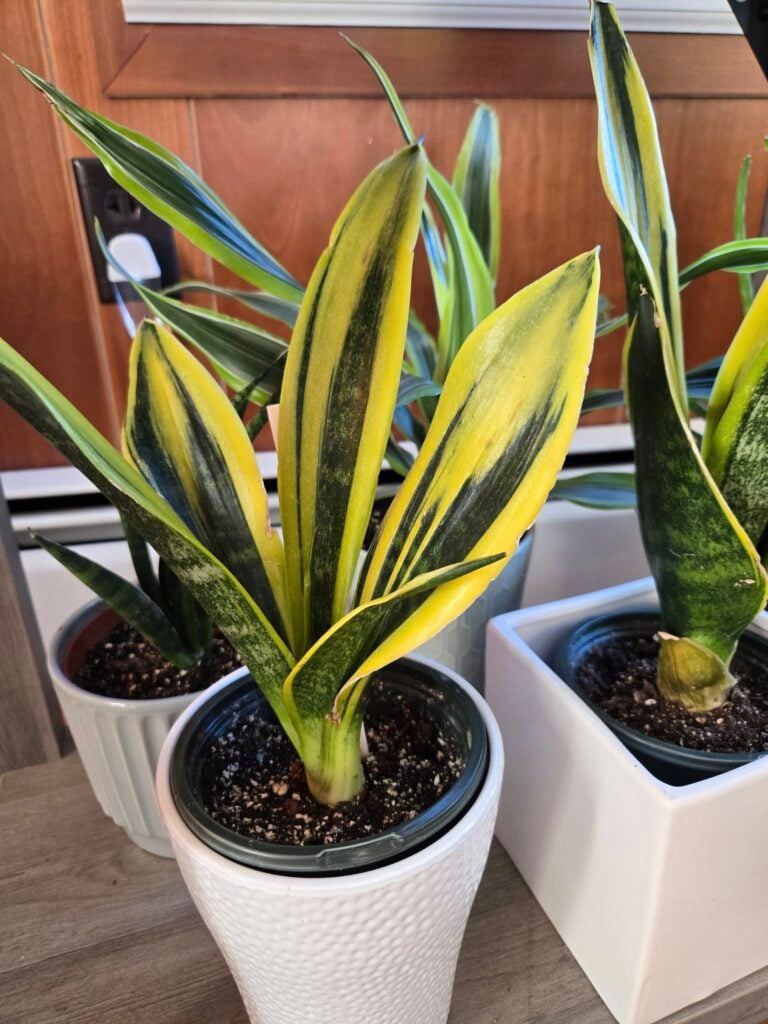
Snake plants store water in their thick leaves, which act like tiny tanks, which is why they’re incredibly drought-tolerant and can go weeks without water.
They evolved in dry climates, so their leaves hold onto moisture until the plant needs it.
What does this mean in practical terms? It means you must let the soil dry out between waterings.
Unfortunately, overwatering is such a common mistake with snake plants! Experts often say it’s better to underwater than to overwater.
That said, when snake plants do get the right amount of water and light, they reward you with new leaf growth and bold variegation.
The better the conditions (think warm room and steady light), the more often the plant might want water. So let’s see how often you should water it.
How Often to Water Your Snake Plant
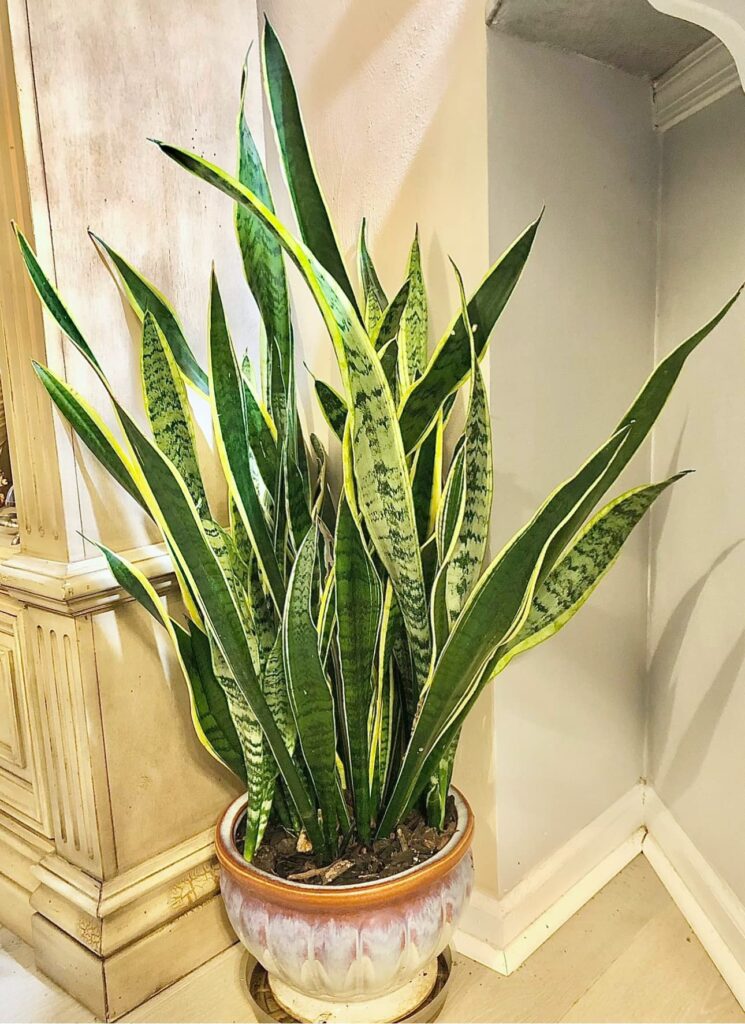
There’s no one-size-fits-all schedule, but a good rule of thumb is to water only when the soil is completely dry.
In spring and summer (the active growing season), many snake plants do well with a watering cycle of about every 2–3 weeks.
In practice, check the soil about once a week by poking a finger 2–3 inches deep: if it still feels moist, hold off a few more days.
When the top inch feels crisp and not damp, it’s ready for more water. I also think of it in simple seasons:
As I was saying, in spring and summer, the plant is actively growing, so the soil dries faster.
While in fall and winter, you should usually water them once a month.
Also consider that snake plants enter a semi-dormant phase as light and temperatures drop, so they prefer drier conditions.
Of course, adapt to your environment: a plant next to a bright and warm window might need more frequent watering than one in a cooler, dim room.
Watering Tips and Techniques
When it’s time to water, do it thoroughly but carefully. Always use a pot with a drainage hole and a well-draining soil mix.
Pour water slowly and evenly over the soil until it’s wet, but don’t let the pot sit in standing water.
After watering, dump any excess from the saucer after 10–15 minutes, since leaving water around the roots for too long causes rot.
Another trick is bottom watering: fill a shallow tray with about an inch of water and set the pot on it for 10–15 minutes so the soil wicks up moisture.
Then dump out any leftover water. This saturates the roots without wetting the leaves, and it’s convenient if I can’t reach every inch of soil from the top.
Signs of Overwatering vs Underwatering
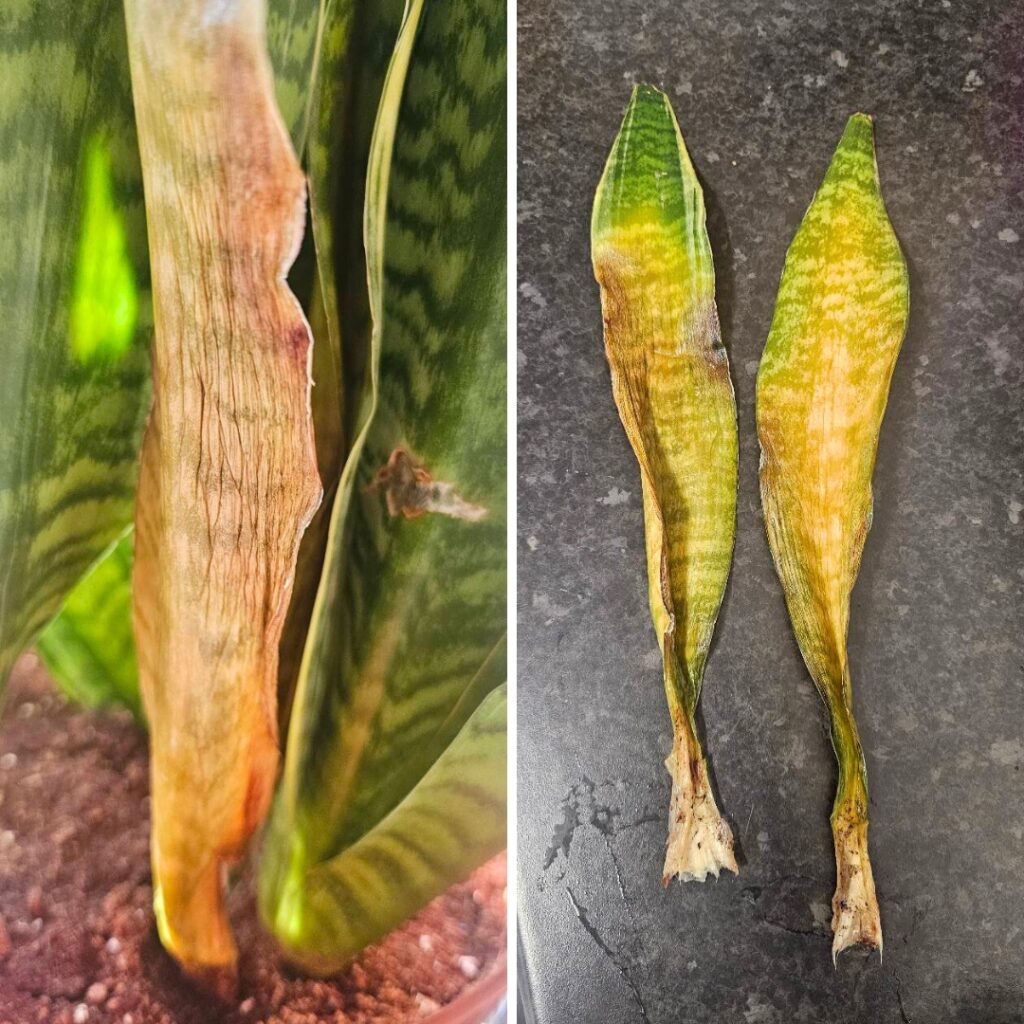
As I was saying, the most common mistake is watering too much. When a snake plant is overwatered, its leaves turn yellow and feel soft and mushy.
The soil will stay wet, and roots may turn brown and mushy (rot setting in).
On the contrary, an underwatered snake plant will look droopy and limp. Its leaves may curl or develop dry brown tips (think of them wilting a little).
You’ll also notice that the soil will be very dry and may even pull away from the pot edges.
I remember the first time my snake plant’s leaves went yellow and floppy, and I panicked!
I immediately checked the soil and noticed that it was still very wet beneath the top layer, even though I hadn’t watered the plant that day.
Since then, I’ve learned to trust the dryness cue. If you ever see yellow, mushy patches, skip watering entirely until things dry out.
PRO GARDENER: Snake plants bounce back from thirst much more easily than from rot!
Other Care Tips & Common Mistakes
Watering is key, but snake plants also have a few other needs. For example, bright and indirect light brings out the best in snake plant leaves.
They can survive in low light, but you will definitely get slower growth and paler colors.
Other essential things are the soil and the pot size. You should use a well-draining potting mix, preferably a cactus or succulent blend.
I also always recommend clay pots because they wick moisture and help prevent overwatering.
Lastly, I want you to avoid a common mistake, which is a fixed watering schedule. You should absolutely avoid it!
Things like “water weekly” or “water once a month” are always wrong. You should check the soil first every single time. And if you want perfect plants indoors, you should also check these specific tricks.
EXTRA TIP: Inspect The Roots
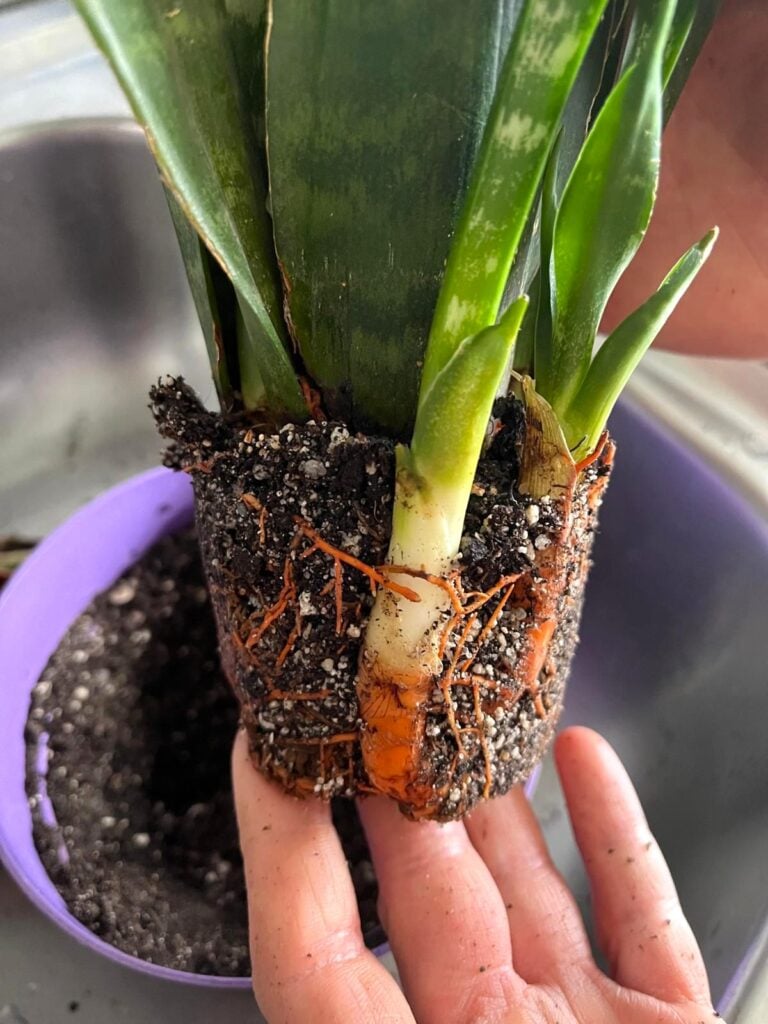
If your plant doesn’t appear healthy and you are unsure why, the best strategy is to inspect the roots.
Tip the pot on its side and ease the plant out. If it’s stuck, squeeze the pot a bit or tap the bottom.
Shake off loose soil, but don’t scrub. Just let excess soil fall away so you can see what’s going on.
- Healthy roots: firm, pale white to light orange
- Rhizomes: thick, horizontal stems, totally normal
- Problem roots: black, mushy, slimy, or smelly
If you see rot, snip it off with clean scissors. Leave healthy roots alone.
Repot right away with fresh and (very important) well-draining soil.
Last thing to check: the pot must have drainage and be of adequate size, neither too large nor too small.