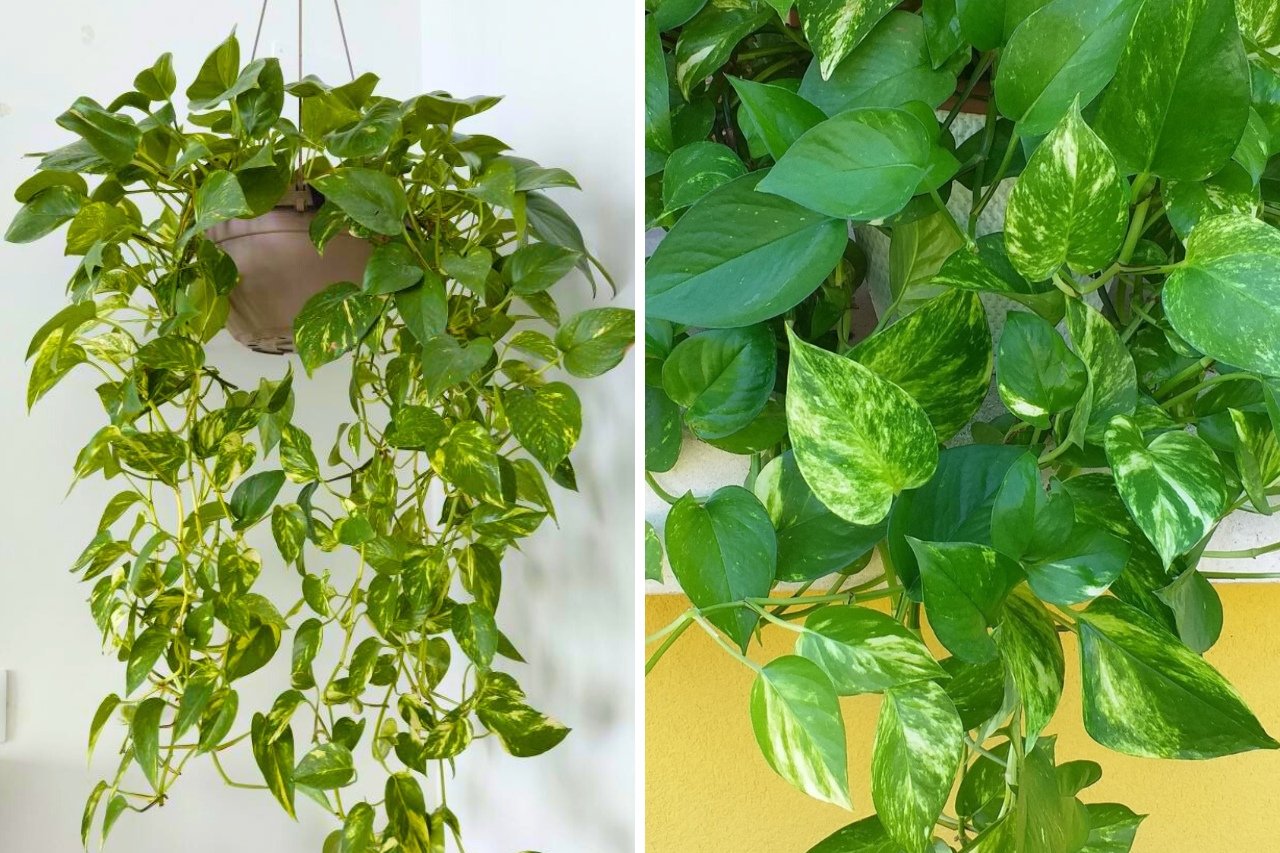
Pothos is one of the first plants I ever had, and honestly, it makes you feel like a plant genius.
It grows, it forgives, it looks good even when life is chaotic. It’s basically a low-drama plant that I always recommend to people who don’t wanna spend too much time gardening.
However, even this plant has its weaknesses, and there are common mistakes to avoid at all costs to keep it healthy. Let’s see what they are and how to avoid them easily!
1. Treating pothos like a cactus
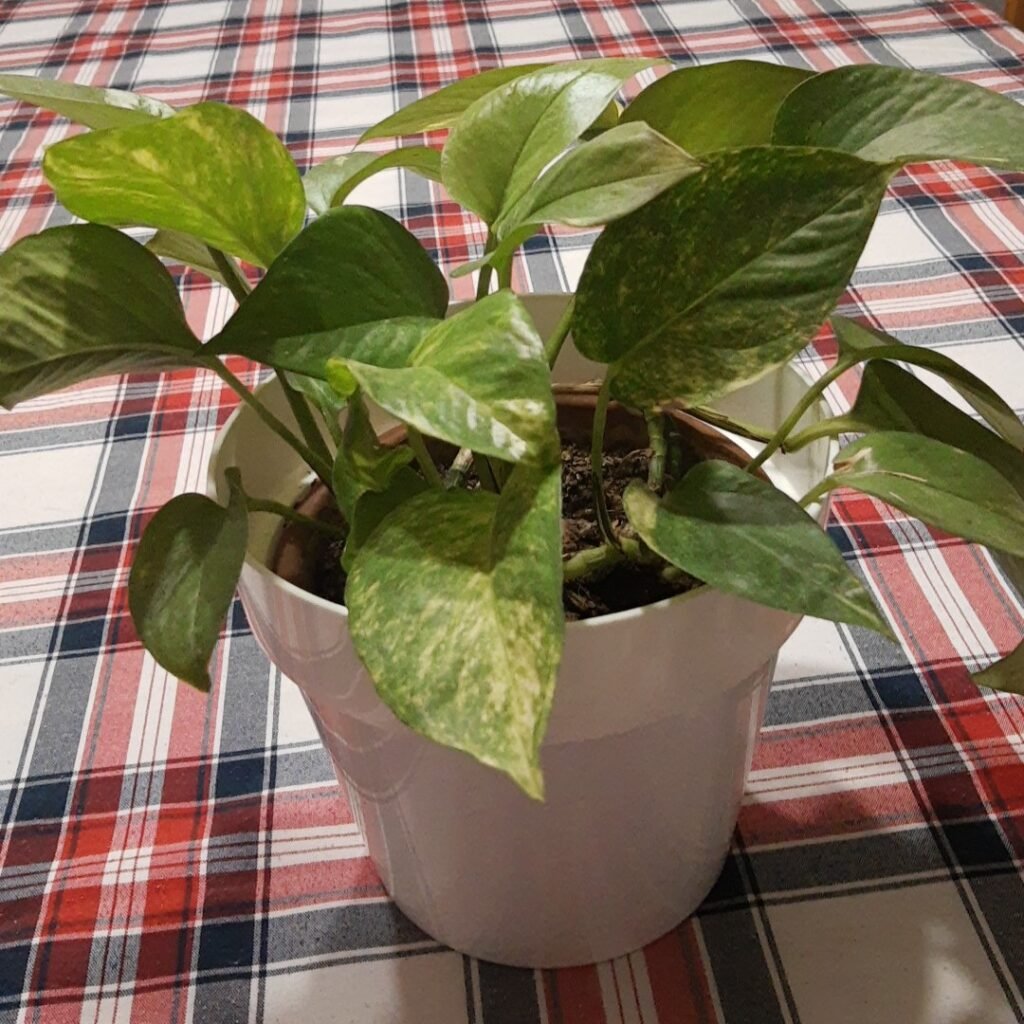
We often say that pothos is tough. That is true, but tough doesn’t mean “doesn’t need anything ever.
If it’s been a while and the leaves feel a little limp, the vines look tired, or the soil has pulled away from the pot like it’s trying to escape, that’s usually a thirsty plant.
Water when the top couple inches of soil feel dry. And when you water, water fully. A quick little splash doesn’t really help.
2. Overwatering because it looks sad, then panicking and watering more
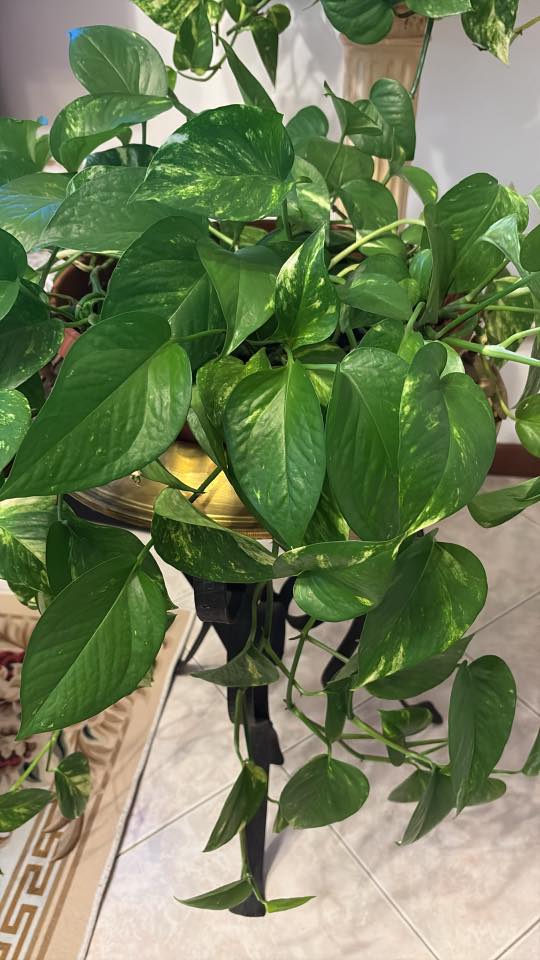
This is probably the most common pothos mistake.
A droopy pothos can mean it needs water, but it can also mean that the roots are drowning.
And the second one is way more annoying to fix. Overwatered pothos often gets yellow leaves, soft stems near the soil, and that slightly funky smell.
To avoid this very common mistake, always check the soil before watering. If it’s still damp down a couple of inches, you must wait. Pothos would rather be slightly dry than constantly wet.
3. Keeping it in a dark corner
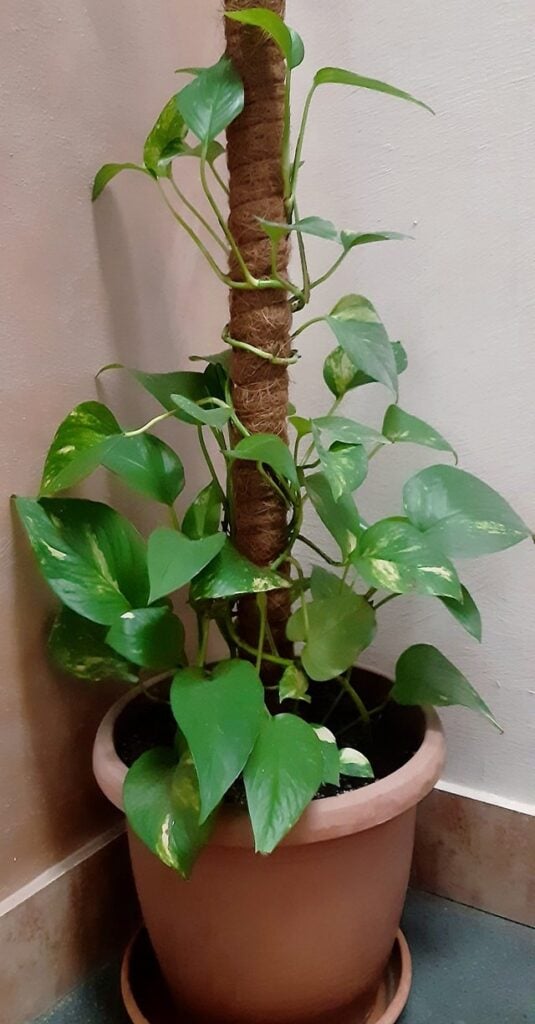
Pothos will survive in low light, and that is absolutely true.
But “survive” is not the same as “thrive and look lush and full.”
In low light, pothos tends to get leggy, with longer gaps between leaves, smaller leaves, and slower growth.
Sometimes the variegation fades too, which is honestly heartbreaking if you bought a pretty one.
As with most indoor plants, bright and indirect light is the best choice.
PRO TIP: The best choice is usually near a window, but not in harsh direct sun all day.
4. Leaving it in the same pot forever
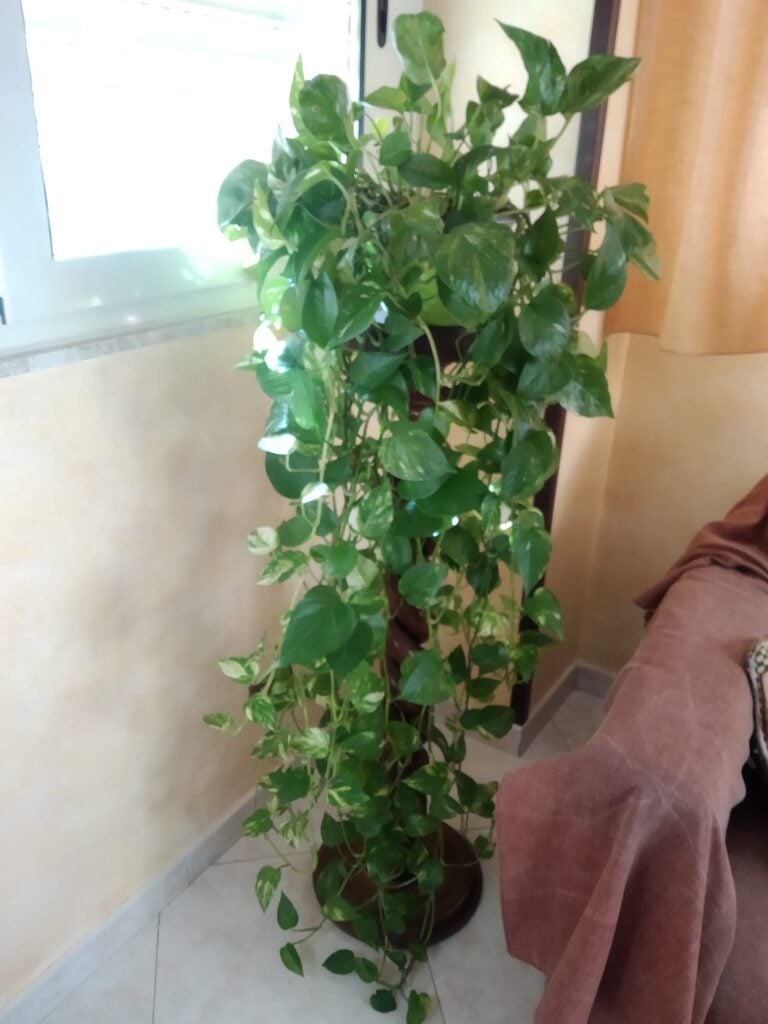
Pothos will keep growing even when it’s slightly root bound.
But eventually, growth slows, watering becomes weird (soil dries out in 24 hours, or water runs straight through), and the plant just doesn’t look as happy.
Sometimes it starts making smaller leaves because it’s basically out of room.
You should check the roots once in a while. If you pull the plant out and it’s basically all roots with barely any soil left, it’s time to repot.
And please, move up one or two pot sizes, not more. Bigger isn’t always better. Too much extra soil can hold too much water.
5. Using the wrong kind of soil
Many basic potting soils retain water for a long time. That can be okay for some plants, but pothos really prefers air around the roots.
Dense and heavy soil, plus a pot with poor drainage, is how pothos ends up with root rot, and your plant will always look like it’s struggling.
To avoid this mistake, use a chunkier mix. Even just adding perlite, orchid bark, or coco chips to regular potting soil helps a ton.
And please, please use a pot with drainage holes unless you’re extremely confident in your watering habits and you’re a real expert.
6. Never pruning
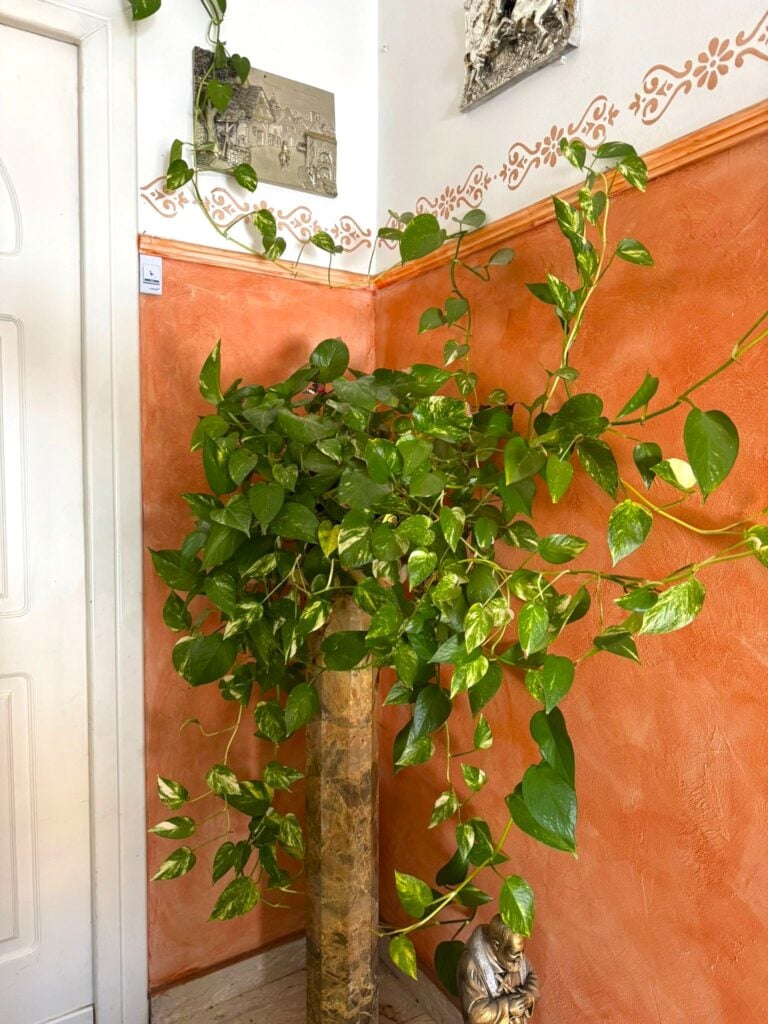
This one is sneaky because pothos grows fast, so it feels like everything is fine. But the top can get sparse while the ends keep stretching out like spaghetti.
I had one pothos that was basically a green curtain with a bald scalp, it wasn’t looking cute at all.
So remember to trim it back sometimes. Pruning encourages branching, which helps it look fuller.
And the best part: you can propagate the cuttings and make more plants, which is dangerously satisfying.
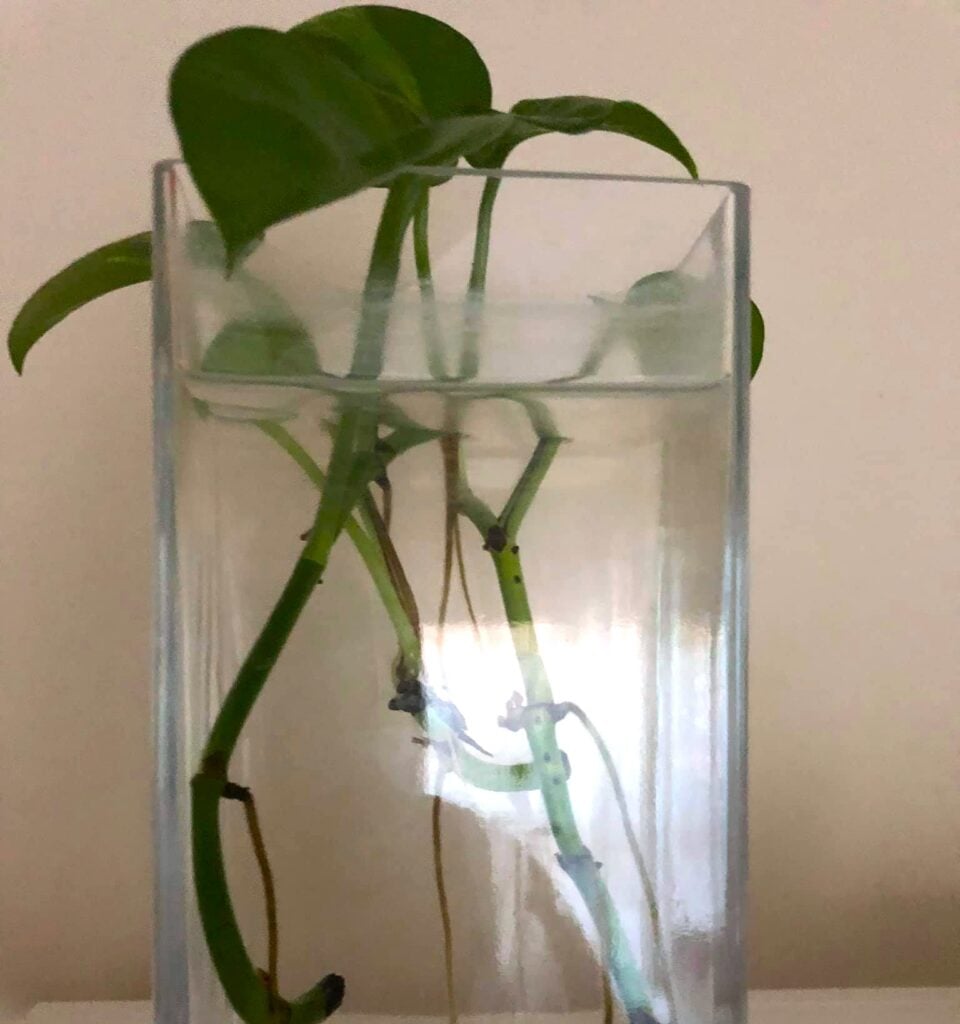
Quick propagation tip: Cut just below a node (that little bump where roots would grow), pop it in water, and wait. Roots usually show up within a couple weeks.
7. Ignoring pests
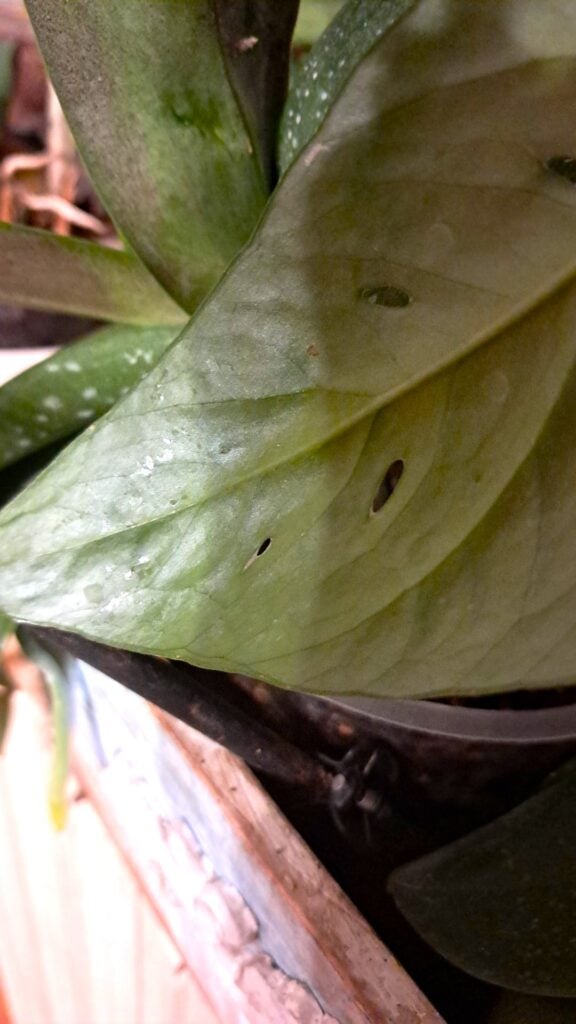
Unfortunately, many people ignore pests because they think that pothos doesn’t get bugs.
In reality, pothos can get spider mites, mealybugs, and scale. Usually, it happens when the plant is stressed, dusty, or living indoors with dry air.
Spider mites especially love that heated and dry environment during winter.
So don’t forget to check the undersides of leaves every now and then. If leaves look speckled, sticky, or weirdly dusty and dull, inspect them more closely.
Wipe leaves with a damp cloth and isolate the plant if something’s crawling.
I highly recommend reading the article with the tips to keep your indoor plants healthy and looking great.