
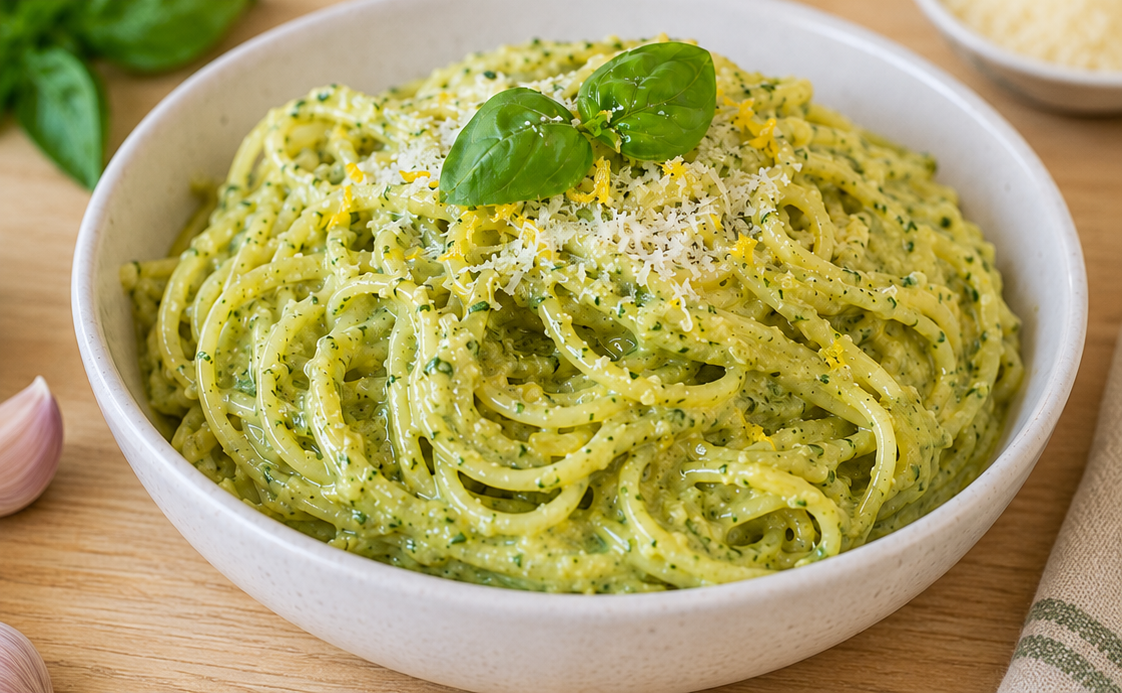
There is something about lemon and basil together that just works every single time. Fresh, bright, a little rich, a little sharp, and when it all gets tossed with hot pasta and plenty of Parmesan, it turns into one of those dinners that feels way fancier than the effort it actually takes.
This lemon pesto pasta is creamy without being heavy, full of fresh basil flavor, and honestly just very easy to fall in love with. The sauce comes together fast in a food processor, and once the pasta hits the bowl, everything gets glossy and silky in that really satisfying way. A little lemon zest on top makes it even better.
It is the kind of meal that feels perfect for spring and summer, but it works all year too. Especially on nights when dinner needs to be good, fast, and not complicated.
Why This Lemon Pesto Pasta Is So Good
Classic basil pesto is already hard to beat, but the lemon changes the whole mood of it. It tastes lighter, fresher, and a little more lively. The Parmesan and olive oil make it rich, the pine nuts give it that soft nutty flavor, and the garlic keeps it from feeling flat.
Then there is the pasta water. That part matters more than people think. It helps the pesto cling to the pasta and turns everything smooth and creamy instead of thick or clumpy.
No cream needed. Just a blender, a pot of pasta, and a few good ingredients.
Ingredients
For the lemon pesto:
- 2 packed cups fresh basil leaves
- 1 garlic clove (or more depending on personal taste)
- 1 cup finely grated Parmesan cheese
- 1 third cup pine nuts
- Zest of 1 lemon
- 2 tablespoons fresh lemon juice
- 1 half cup extra virgin olive oil
- 1 half teaspoon salt, or to taste
- 1 fourth teaspoon black pepper
For the pasta:
- 12 ounces spaghetti or linguine
- 1 half to 3 fourths cup reserved pasta water
- Extra Parmesan, for serving
- Extra lemon zest, for serving
- Fresh basil leaves, for garnish
How To Make Lemon Pesto Pasta
1. Cook the pasta
Bring a large pot of salted water to a boil and cook the pasta until al dente. Before draining, save at least 1 cup of the pasta water. That starchy water is what helps the sauce turn silky instead of stiff.
Drain the pasta, but do not rinse it.
2. Make the lemon pesto
While the pasta cooks, add the basil, Parmesan, pine nuts, garlic, lemon zest, lemon juice, salt, and black pepper to a food processor. Pulse a few times just to break everything down.
With the processor running, slowly drizzle in the olive oil until the pesto becomes mostly smooth. It does not need to be perfectly pureed. A little texture is actually nice here.
Give it a taste and adjust the salt or lemon if needed.
3. Toss everything together
Add the hot drained pasta to a large bowl or back into the warm pot. Spoon in the lemon pesto and add a splash of reserved pasta water.
Toss well. Add more pasta water a little at a time until the sauce loosens and coats the noodles evenly. It should look glossy and creamy, not dry.
Top with more Parmesan, a little extra lemon zest, and a few basil leaves.
Serve right away.
A Few Helpful Tips
Use good Parmesan
This recipe leans on simple ingredients, so the Parmesan really matters. Freshly grated melts better and tastes much richer than the pre shredded kind.
Do not skip the lemon zest
The zest gives the sauce most of its lemon flavor. The juice adds brightness too, but the zest is what makes it smell amazing.
Loosen the sauce with hot pasta water
Cold water will not do the same thing. The hot starchy water helps the pesto melt into the pasta and creates that creamy texture.
Avoid over blending
Pesto should still feel fresh. If it gets blended forever, the basil can lose some of that bright flavor and color.
Ingredient Swaps That Work
This recipe is flexible, which is always nice.
- Walnuts can replace pine nuts if needed
- Pecorino can be used instead of Parmesan for a saltier bite
- Short pasta works too, especially fusilli or penne
- A spoonful of ricotta can be stirred in for an even creamier finish
- Grilled chicken or shrimp can turn it into a fuller meal
Even a handful of baby spinach blended in with the basil works if the basil supply is looking a little sad.
What It Tastes Like
Bright and savory, with a creamy texture and a fresh lemon finish that keeps it from feeling too rich. The basil is the main flavor, but the lemon definitely shows up. Not in an overpowering way. Just enough to wake the whole sauce up.
It tastes fresh. Comforting too, somehow. A good mix.
How To Store Leftovers
If there are leftovers, store them in an airtight container in the fridge for up to 3 days.
To reheat, add the pasta to a skillet or saucepan with a splash of water. Warm it gently over low heat and stir until the sauce loosens again. The microwave works too, but the stovetop usually gives a better texture.
The pesto on its own can also be stored in the fridge for a few days. A thin layer of olive oil on top helps keep the color looking nicer.
Serving Ideas
This pasta is great on its own, but it also goes really well with a few simple sides:
- garlic bread
- roasted vegetables
- grilled chicken
- a crisp green salad
- burrata on top for something extra
A few crushed red pepper flakes can be nice too if a little heat sounds good.
Lemon Pesto Pasta Recipe Card
Ingredients
- 12 ounces spaghetti or linguine
- 2 packed cups fresh basil leaves
- 1 garlic clove
- 1 cup finely grated Parmesan cheese
- 1 third cup pine nuts
- Zest of 1 lemon
- 2 tablespoons lemon juice
- 1 half cup extra virgin olive oil
- 1 half teaspoon salt
- 1 fourth teaspoon black pepper
- 1 half to 3 fourths cup reserved pasta water
- Extra Parmesan and lemon zest for serving